
Submitted and written by Carrie Eldridge for The Lawrence Register website, lawrencecountyohio.com.
Sources:
- American Baptist Historical Society and Colgate Collection – www.ABHarchives.org
- Underground Railroad Society of Cass County, Michigan – www.urscc.org *
- The Lawrence Register: www.lawrencecountyohio.com
- “Freedom Lies Across the River,” written by Carrie Eldridge
In 1847, a group of Kentucky slave holders went to Cass County, MI, planning to recover their property, considered runaway slaves. Called the “Kentucky Raid”, these men soon discovered that the local Quaker population and the free Black residents would allow no people to be removed from the county. The legal case made National headlines and became one of the reasons for the passage of the 1850 Fugitive Law. The “Kentucky Raid” also had repercussions along the Ohio River in both Cabell County, VA/WV, and Lawrence County, Ohio.
In 1849, Sampson Sanders of Cabell County, VA/WV, manumitted all his slaves and provided them with money and transportation to settle in free territory. His executors selected to send the entire group to Cass County, Michigan, where they settled in Calvin and Porter townships near the Chain Lake Baptist Church. Calvin Sanders returned to Lawrence County, Ohio, in 1850 and worked in the Iron Industry until his death in Ironton in 1894.
Lawrence County had a recognized station on the Underground Railroad (UGRR) located at the northern edge of the county in Washington Township. That station centered around the Union Baptist Church in Poke Patch, and its members were led by ministers of the Stewart family.
Most of the area settlers were freeborn Black, manumitted slaves, and native Americans who were willing to help runaways escape slavery. These people settled in the rough forest and swampy areas of Upper Symmes Creek, where they were hard to find. Many worked at the various iron furnaces, and one furnace owner, William Campbell, was even willing to sell the workers small plots of land.
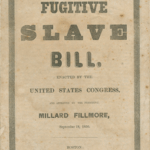 The 1850 Fugitive Slave Act endangered all non-white persons because no proof was needed before capture happened. The ‘Act’ required everyone to aid in capture of any person considered a runaway slave,’ People risked arrest and monetary fines for refusing to help. The Stewart families knew their lives were in danger for several reasons.
The Providence Anti-Slavery Baptist Association had several names and several missions. The Black ministers of Lawrence County were missionaries who traveled the length and breadth of Lawrence County. They also seemed to aid escapees as well as provide supplies and safe houses along the UGRR, often associated with their churches.
By 1856, the minister of Lawrence County, Ohio, William Stewart, was preaching at Union Church in Poke Patch. He was also preaching at Chain Lake Church in Cass County, Michigan, where he baptized several new members. By 1858, some thirty Stewart families connected to Union Church had followed William Stewart to Michigan.
A little-known link connected the Black Churches and their members, from Macedonia in southeast Ohio, on the Ohio River, to the Union Church at Poke Patch, clear across Ohio along the Underground Railroad system, to the southeast corner of Michigan. The removal of so many Lawrence County supporters almost brought the Poke Patch Station to collapse, but their settlement in Michigan likely saved their lives.
*Cass County, Michigan, has an excellent historical collection located at the Bonine House. The site is www.urscc.org (Underground Railroad Society of Cass County). They have many family documents and information on both the Kentucky Raid and Chain Lake Church.
0 Comments